
From 3 Drop Sites to 23: Scaling Municipal Composting in Charleston County
How Denali Corp uses EcoSafe compostable liners and kitchen caddies to keep residents engaged and routes running smoothly across one of South Carolina's largest municipal drop-site composting programs

| Partner | Denali (formerly Smart Recycling) |
|---|---|
| Sectors | Municipal drop-site programs, restaurants, universities, school systems, grocery & retail |
| Locations | Charleston County, South Carolina, with programs across the wider Denali footprint in the U.S. and Puerto Rico |
| EcoSafe products | EcoSafe compostable liners for 64-gallon service totes; EcoSafe kitchen caddies for residents; EcoSafe 16x17 compostable bags |
| Results | Program grew from 3 drop sites in 2002 to 23 drop sites across roughly 8 municipalities by 2026; measurable labor savings from longer tote life and less rinsing; strong resident demand for liners; expanding liner use into new U.S. markets |
About Denali
Denali is the leading provider of nationwide organic waste management and beneficial reuse solutions with the largest, most diverse, and vertically integrated network in the organics sector. They focus diverting organics from landfills and transforming them into renewable resources to feed, fertilize, and fuel the earth. Meghan McGill joined Denali through its acquisition of Smart Recycling, a regional Carolinas hauler. She spent seven years with Smart before the acquisition.
Meghan’s primary focus is to expand Denali’s customer base in the Carolinas. She activates food and organics recycling programs with restaurants, universities, and school systems. Meghan also builds and supports municipal organics recycling programs.

The Challenge
Municipal drop-site programs live or die on participation and convenience. Residents need a way to store food scraps at home without mess or odor, transport them without spills, and stay motivated to keep coming back especially since, unlike curbside programs, nothing shows up at their door to remind them.
On the collections side, Denali's totes get serviced repeatedly across a route. Totes that retain odor or require extra rinsing at every stop adds time, and that adds up quickly across a growing number of drop sites.


Why EcoSafe Zero Waste
Denali had used EcoSafe products in a limited capacity early on, then briefly used another-branded liner before switching back. Meghan tried using leftover compostable liners from another brand herself and found them tearing and falling apart, a hands-on data point for the switch back to EcoSafe. Since then, EcoSafe has consistently come up as a top option whenever alternatives are considered.
The Solution
A few years into the partnership, Denali made EcoSafe liners standard across every serviced 64-gallon tote (not just what residents use in their own kitchens), but what Denali uses in the totes it services on route. The switch paid for itself: totes lasted longer, retained less smell, and needed less rinsing at each stop.
On the resident side, municipalities purchase EcoSafe kitchen caddies, often using grant funding, and give them away for free, both as a sign-up incentive and as a giveaway at community tabling events. Most participating municipalities repurchase caddies year over year, using them as an ongoing education and participation tool.
Because many residents transport scraps to a drop site rather than composting at home, spill-proof handling matters. Residents are also told they can freeze a full liner between drop-off trips as it holds up well in the freezer and travels without leaking.
Rollout is flexible by design: totes sited in high-traffic public spaces like parks, libraries, and beaches; unlocked drop points at staffed county convenience sites; or app-based access that unlocks bins and tracks participation data for the hauler and municipality. Charleston, the first city in South Carolina to build a program like this, has openly shared its playbook so other municipalities can replicate it.
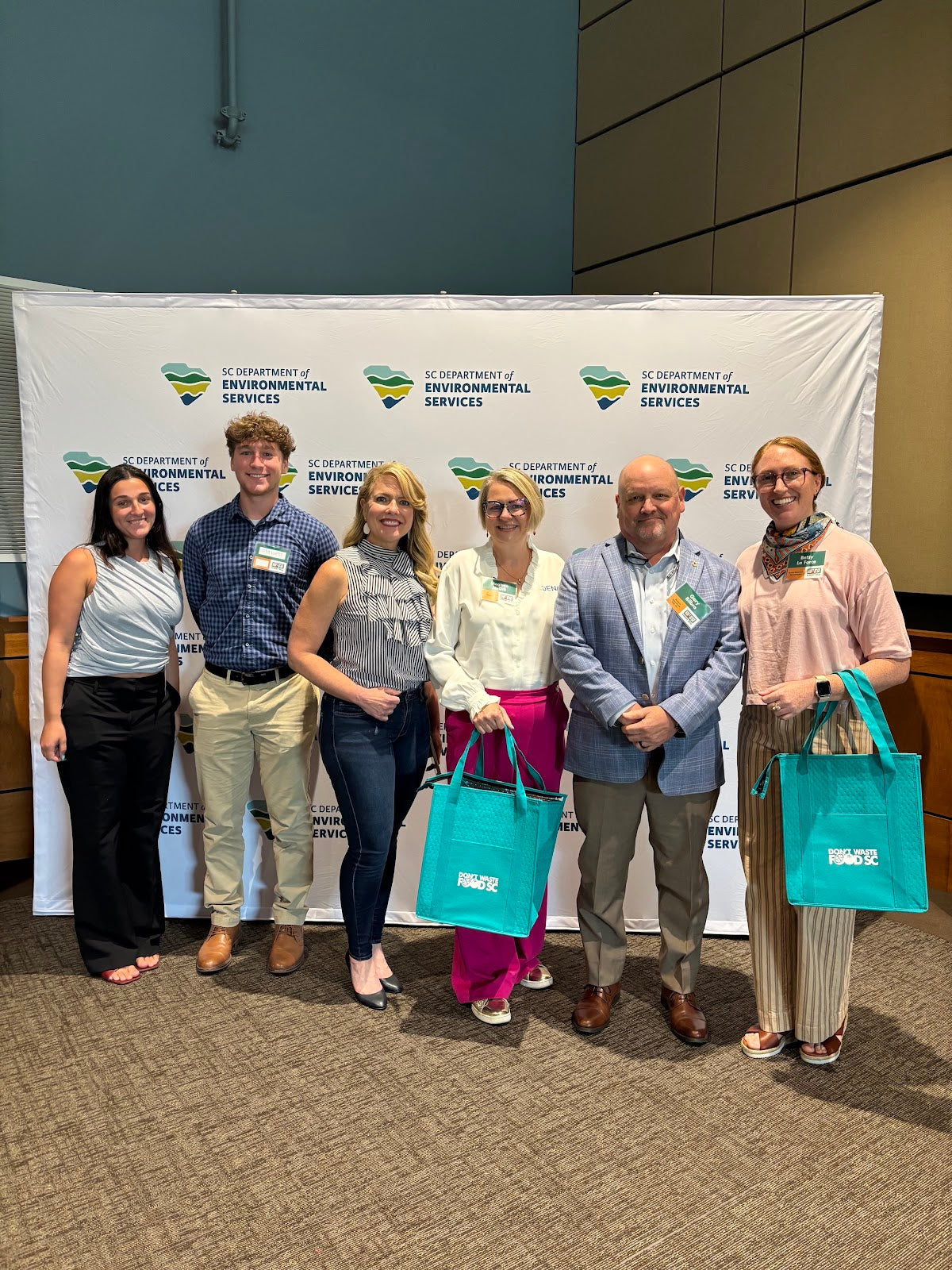
The municipalities leaned on South Carolina's statewide SC Don't Waste Food program for training materials, signage, and acceptable/unacceptable material lists.


The Results
Charleston's drop-site program launched in 2002 with the city of Charleston and 3 drop sites. In 2026, it spans 23 drop sites across roughly 8 participating municipalities - nearly every community in Charleston County, including every island in the county, now has at least one site.
The compostable liner switch produced measurable labor savings on service routes, and resident demand speaks for itself: when a truck runs out of liners even for a day, customers notice and ask for them. Many of Denali's municipal customers also use EcoSafe products in their own kitchens.
In Their Words
Meghan pointed to a delivery mishap in which kitchen caddies arrived damaged after a rescheduled shipment which was not EcoSafe's fault, but EcoSafe still refunded the difference for every damaged unit, without her having to push for it.
What's next
Denali is extending its use of EcoSafe certified compostable liners into new markets in South Carolina as it grows its 64-gallon tote service line. Denali's core business centered on 3-yard bins for grocery stores and large-volume producers and is now adding the smaller-footprint residential and municipal service and expects to lean on liners more heavily as that side of the business scales.
